Car Shipping Tips
What documents do you need to ship a car?

Written by:

Published on
•
17 min read
Published on
•
17 min read
Most people assume that a lot of paperwork is involved when shipping a car. Thankfully, the reality is that there isn’t much. For a standard domestic shipment, the one document you will need is the Bill of Lading (BOL). Everything else is either optional, specific to unusual circumstances, or something the carrier handles on their end. Knowing which vehicle shipping documents apply to your situation saves time before pickup.
These are the car shipping documents you are most likely to encounter.
Top 3 highlights
The Bill of Lading is the only official document always required. The trucker will provide it at pickup, and it contains your vehicle condition report, shipping contract, and proof of delivery.
You don't need to produce your personal auto insurance, title, or registration for most domestic shipments. Although these are common requests from some carriers as a preference, it’s not a legal requirement.
If someone else is handling pickup or delivery on your behalf, that’s fine. Anyone over 18 can release or accept the vehicle. They just need a valid ID.
Ready to ship?
Your journey starts here:
What is the Bill of Lading?
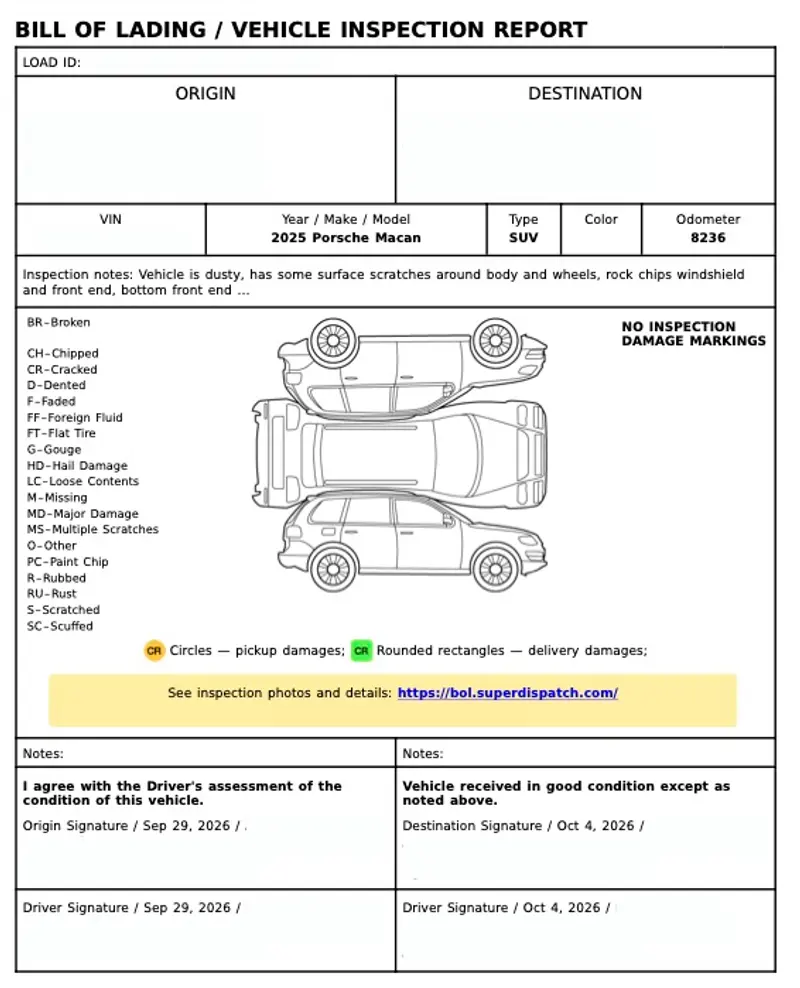
The Bill of Lading is the one document you cannot ship without. The driver brings it to the pickup. You both walk the car, note the condition, and sign. Then you do it again at delivery. If your vehicle arrives damaged and it's not on the Bill of Lading, your claim is going nowhere.
Most people call it the BOL. It acts as the shipping contract, the condition report, and the proof of delivery all at once. Three things, one piece of paper.
It’s worth keeping a few things in mind, however. Take photos of your vehicle before pickup and keep a copy for yourself. Don't rely on the trucker's copy alone. At delivery, inspect the vehicle properly before you sign, in good light if you can manage it. If delivery takes place during the night or in poor lighting conditions, that should be noted on the paperwork. You should note anything you find as soon as you can see the car clearly. You should never sign the final BOL confirming the vehicle is in good condition if it isn't.
What happens if you don't receive a Bill of Lading?
Don't hand over the keys.
Every licensed carrier is legally required to provide one. No exceptions. If the trucker turns up without it, that's a problem worth pausing for. Contact WeShipCars before you do anything else.
Lost your copy afterwards? It happens. Get in touch, and we can help you track it down. You'll want it if damage shows up later. Without it, making a claim is a much tougher process. Not impossible, but harder than it needs to be.
What documents do you need to ship a car?
For most standard domestic road shipments, the answer is simpler than you'd think. The Bill of Lading is the only document always required by law. Everything else comes down to carrier preference, your specific circumstances, or situations like port-based or international shipping. Most people need far less paperwork than they expect.
It's worth noting upfront that most of the documents below are carrier preferences, not legal requirements. For a standard domestic road shipment, you're unlikely to need more than one or two of them. The further down the list you go, the more specific the circumstances that apply.
Vehicle title
Your title proves legal ownership of the car. For most standard domestic shipments by road, carriers don't ask for it. Where it becomes relevant is if you're shipping to Hawaii or internationally. This is because port authorities may require proof of ownership as part of the processing. A small number of carriers request it as an internal policy preference, but it isn't a federal requirement for interstate road transport. If your trucker asks for your vehicle title, you should make sure that you have it available, just in case.
Vehicle registration
Your registration confirms the vehicle is legally registered in your state. Again, most carriers don't require this for domestic road transport. If your registration is current and your plates are on the vehicle, that's usually sufficient. Some truckers like to see it for identification purposes, particularly on higher-value shipments.
Government-issued photo ID
A driver's license is the most common form requested. Truckers sometimes ask for it to verify that the person releasing the vehicle is who they say they are. It's not legally required for the shipment to proceed, but it's sensible to have it on you at pickup anyway. If someone else is arranging pickup or delivery of your vehicle, they'll need their own ID and preferably a letter of authorization from you.
Proof of personal auto insurance
You don't need to show proof of personal insurance to ship your car. The carrier holds their own cargo and liability insurance, which is what covers your vehicle during transport. Some truckers ask for proof of your personal policy as an internal preference, but it's not a shipping requirement. If you want to understand how the carrier's coverage interacts with your own policy, our guide on car shipping insurance covers this in detail.
Dealership pickup
Buying a vehicle from a dealership and having it shipped directly? There’s one extra step worth knowing about.
Before the driver arrives at the dealership to collect your vehicle, ask them to send you two things. A photo of their driving license. And a photo of the truck, with the DOT number clearly visible.
Send both to your dealership sales contact. The dealership needs to verify the driver before releasing the vehicle. It’s a straightforward fraud prevention step, and most reputable carriers expect it. Don’t skip it. Dealers won’t release the vehicle to an unverified driver, and sorting it out on the day causes delays.
What is a payment receipt for car shipping documents?
Two documents. That's all you need to keep hold of. Your payment receipt and your booking confirmation.
- The payment receipt proves what you paid. Simple as that. If a billing dispute comes up later, it's what you'll point to.
- The booking confirmation has everything else. Pickup and delivery addresses, your carrier, the rate, the delivery window. Keep it somewhere you can actually find it. Not buried in your inbox. If something comes up mid-shipment, you'll want it quickly.
Neither of them is something the driver checks at pickup. But both are worth saving properly. Download them when you get them. Don't assume they'll be easy to dig out later.

What documents do you need for special situations?
Standard continental US road shipments need nothing beyond the Bill of Lading. A handful of situations change the auto transport documents you need to have ready. Port shipments to Hawaii, international transport, third-party handoffs, and inoperable vehicles all have their own requirements. If any of these apply to your shipment, here is what to prepare.
Hawaii
The auto transport documents required for Hawaii car shipments differ from standard road transport. The port authority requires proof of ownership (your title document). If your vehicle is financed, your lender may require written authorization before it can be shipped. An absent owner authorization is also required if you're not going to be present at the port for pickup or delivery. These requirements apply at the port stage, not to the land transport portion on either side.
International shipping
International vehicle transport involves customs documentation in addition to everything above. The requirements differ by destination country but often include a clear vehicle title in your name. Similarly, a copy of your passport, proof of purchase or valuation, and potentially an export permit depending on the vehicle and the destination. If you're shipping internationally, verify the specific requirements for your destination in advance. Some countries also restrict the import of vehicles above a certain age.
Third-party pickup or delivery
If someone other than the registered owner is handling the pickup or delivery of your vehicle, a letter of authorization naming them specifically is best to have on hand. Some carriers are satisfied with a verbal confirmation. However, others want something in writing. Getting it on paper regardless protects you and the person acting on your behalf if any questions arise later.
Inoperable vehicles
If your vehicle doesn't run, you're not usually asked for additional documents. You do, however, need to disclose this when booking. Inoperable vehicles require specialist loading equipment which some carriers don’t have. An undisclosed non-runner on pickup day is likely to cause delays and potentially incur additional charges.
Ready to ship?
Your journey starts here:
What should you have ready on pickup day?
On pickup day, you’ll need your booking confirmation. This is a reference for the shipment details if anything needs checking. You’ll also need your photo ID, in case the driver asks, and your phone to document the vehicle's pre-shipment condition with timestamped photos. If someone else is picking up the vehicle on your behalf, they’ll need the letter of authorization for them to present.
Do digital documents and photos count?
Short answer: yes, mostly.
Photos taken on your phone count as evidence, provided they are timestamped. This is one of the reasons taking photos immediately before pickup and immediately after delivery matters so much. A timestamped photo showing no damage at pickup and then damage at delivery is strong supporting evidence for a claim.
Electronic copies of your booking confirmation and payment receipt are fine for reference during transit. If you're ever asked to produce a letter of authorization or a Power of Attorney, though, most carriers want a physical copy or a clearly legible printed version. A screenshot is rarely sufficient for that.
The thing is, most carriers have gone digital. Apps like SuperDispatch or Ship.Cars handle the whole thing now. The driver does the inspection. Then you get a link. You review it, sign it remotely, done.
Some drivers still show up with paper. Old school, but it happens. The process is the same either way. Look it over properly before you put your name to anything.
What should you check before signing the Bill of Lading?
At pickup, the driver will go through the vehicle with you. It’s important to take it seriously rather than rushing through it. Any existing damage should be noted specifically on the BOL, not just marked with a vague notation. If there's a scratch on the rear bumper, it should say "scratch on rear bumper," not "minor body damage." Being specific is important if you need to use that record later.
At delivery, do the same walk-around before you sign anything. Compare what you see to the pickup notes. If something new appears that wasn't documented at pickup, note it on the delivery BOL. You should photograph it immediately and contact WeShipCars before you leave. If you do have to make a claim, having raised any issues at delivery makes it a much smoother process.
What should you do at delivery?
When the driver arrives, do a full walk-around of the vehicle together before anything is signed. Compare what you see against the condition noted on the Bill of Lading at pickup. If something new has appeared, note it on the BOL before you sign. Take photos straight away.
If your shipment is Cash on Delivery, pay the outstanding balance to the driver at this point and make sure you get a receipt. If your shipment was fully prepaid and the driver asks for payment, don’t pay. Call WeShipCars immediately to resolve it.
Once everything checks out, sign the delivery BOL. That confirms the vehicle has been received in the condition agreed.
Frequently Asked Questions
Do I need insurance to ship a car?
You don't need to show proof of your personal auto insurance to ship a car. The carrier holds its own cargo and liability insurance, which covers your vehicle during transport. If you want your personal policy to act as a secondary layer of protection, contact your insurer to confirm whether your coverage extends to commercial transit situations.
What is a Bill of Lading and why do I need it?
The Bill of Lading is the only document that's always required. It records your vehicle's condition at pickup and again at delivery. It serves as the official contract for the shipment. It's your primary protection if the vehicle arrives damaged. Always inspect the car before signing at delivery.
Do I need my car title to ship it?
For most domestic road shipments within the continental US, no. Your title becomes relevant for port-based shipments, including Hawaii and international transport. A small number of carriers may ask for it as a preference. If yours does, have it available, but don't assume it's a standard requirement.
Can someone else pick up or deliver my vehicle?
Yes. Anyone over 18 can release or accept the vehicle on your behalf. They don’t need a letter of authorization or a Power of Attorney. A valid ID is all that’s required.
What payment receipt do I need for car shipping?
Your booking confirmation from WeShipCars doubles as your payment record and shipment contract. Keep a copy of this and your payment receipt for your records. You may need to reference the shipment details during transit if any questions arise, and both documents serve as your record of the agreed terms.
What documents do I need to ship my car to Hawaii?
Hawaii shipments go through a port, which adds requirements that don't apply to standard road transport. You'll need your vehicle title, and if the car is financed, written authorization from your lender. An absent owner authorization is also required if you won't be at the port personally. Hawaii-bound shipments have stricter documentation requirements than any other domestic destination.
Do I need documents to ship a car across state lines?
For standard road transport within the continental US, the only document required is the Bill of Lading. Crossing state lines doesn't trigger any additional federal paperwork requirements for the vehicle owner. The carrier handles their own compliance. Most people shipping state to state need nothing more than they would for a local shipment.
Can I ship a car without the title?
Yes. For most shipments, you can.
It's not a legal requirement for standard road transport. Some carriers will ask for it. Some won't. If yours does, have it on hand. That's all there is to it.
Hawaii is the exception. So is international shipping. Both go through a port, and port authorities want to see proof of ownership. No title, no release. So if that's where your car is headed, make sure you have it with you.
What if the driver doesn't provide a Bill of Lading at pickup?
Don't release the vehicle. A licensed carrier is legally required to produce a Bill of Lading. It protects them as much as it protects you. If a driver arrives without one, contact WeShipCars immediately. This is not a situation where it's fine to sort out the paperwork afterwards.

Rob Webb is a native English-speaking copywriter with four years of professional writing experience across technology and lifestyle content, including auto transport, vehicle storage, and household relocation coverage for Yahoo! Local. Rob writes clear, well-researched content that helps readers make confident decisions about complicated logistics.
Rob Webb is a native English-speaking copywriter with four years of professional writing experience across technology and lifestyle content, including auto transport, vehicle storage, and household relocation coverage for Yahoo! Local. Rob writes clear, well-researched content that helps readers make confident decisions about complicated logistics.
Ready to roll?
Your journey starts here.
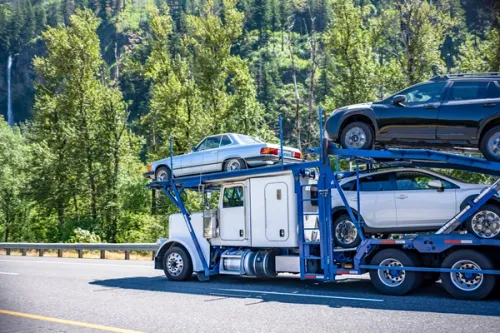
What documents do you need to ship a car?